












The following contains vague, minor spoilers for Project Hail Mary. Read at your own discretion.
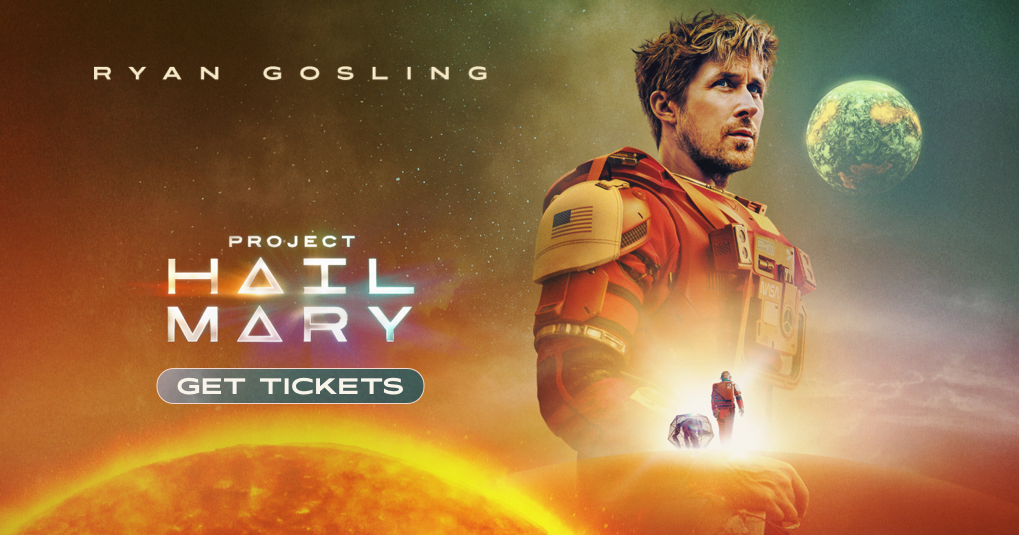
As prevalent and competitive a genre as science-fiction is, it is a rare instance to find a film that is able to so completely blow its competition out of the water: Project Hail Mary is one such movie. Directed by Phil Lord and Christopher Miller (directors of other smash hits such as Cloudy With a Chance of Meatballs and The Lego Movie) and adapted from the 2021 novel of the same name by acclaimed sci-fi writer Andy Weir (writer of The Martian), Project Hail Mary follows the story of a middle-school science teacher who awakens on a ship light-years away from Earth, isolated and plagued with amnesia, who is tasked to save humanity. He meets an unexpected ally, an intelligent alien he names ‘Rocky’, whose civilization suffers the same dangers as humanity, forcing the unlikely duo to work together to save their worlds. The film released on March 20, 2026, making $400 million within the first three weeks of release, far exceeding its roughly $200 million budget. With an 8.4/10 on IMDb and a 93% Rotten Tomatoes score, and with such big names as Ryan Gosling and Andy Weir, the film has a lot of hype and expectations to live up to. So, does it truly meet those expectations, or is it all just hype?
For starters, the film handles the hard, technical sci-fi details of the original book differently: The book had the liberty to go further in-depth with the scientific explanations behind what was going on, while the filmmakers were faced with the challenge of maintaining the hard sci-fi, detailed explanations and respecting the audience’s intelligence while also not bogging the movie down with technical jargon. They accomplished this, managing to include exactly enough information to keep the audience informed and understanding of the events while maintaining the focus on the narrative, spectacle, and respecting the original book. Project Hail Mary is a film that is smart and considers its viewers to also be smart and capable, taking risks that many others in Hollywood wouldn’t dare to, and this gives the movie some soul, some respect.
But the true soul of any film is its narrative, and adapting a novel’s story to the big screen can be a challenge; Project Hail Mary almost flawlessly adapts the original story and all of the major beats. And not only that, but it also manages to deeply connect the audience to Rocky, despite him not having a face or practically any human features other than his intelligence and empathy. In fact, some of the most emotionally charged moments and scenes in the movie revolve around Rocky. Where most movies would resort to “smooth” CGI for anything beyond basic setpieces, Project Hail Mary uses as many practical effects as possible. The whole set for the spaceship much of the story takes place on, the Hail Mary, was fully and faithfully built in the real world rather than computer generated. Rocky himself was a puppet controlled and voiced by his actor, James Ortiz, and slightly edited to appear as lifelike as possible. The filmmakers resorted to CGI only when absolutely necessary, such as for shots made outside of the ship. This leads to a movie where the actors are moving and acting within a physical, real space, grounding the narrative and the film in reality and making it all the more raw and personal.
When discussing the soundtrack of Project Hail Mary, it is important to understand the purpose of music in film: it is meant to elevate the scene, amplify the emotional intensity or gravity of the situation, and carry the themes and meaning of the movie. Here, Daniel Pemberton’s soundtrack does this beautifully, weaving together unorthodox percussion and electronic sounds with orchestral and traditional instrumentals, producing a tapestry of fantastical fiction that still doesn’t feel too far from reality. This is most evident in ‘Time Go Fishing’, which is the most intense and climactic track in the film matching the most climactic and tense spectacle of the story, analogous to Interstellar’s (2014) docking scene.
As an adaptation, Project Hail Mary is mostly narratively accurate to the book, making small changes that would only be noticeable to a keen eye. There are a couple scenes that did not exist whatsoever in the book, but were created for the film for the sake of characterization and audience understanding. As one who has read the book twice, I do see these minor changes as either necessary for translating the story into a movie as well as enhancing the audience’s understanding of the characters and events.
Overall, my final rating for Project Hail Mary is a 10/10. It is an absolute must-see for sci-fi fans and highly recommended for everyone. In a time of apathy and hopelessness, this movie brings a story of humanity, hope, and empathy that can be an inspiration to all of us.