












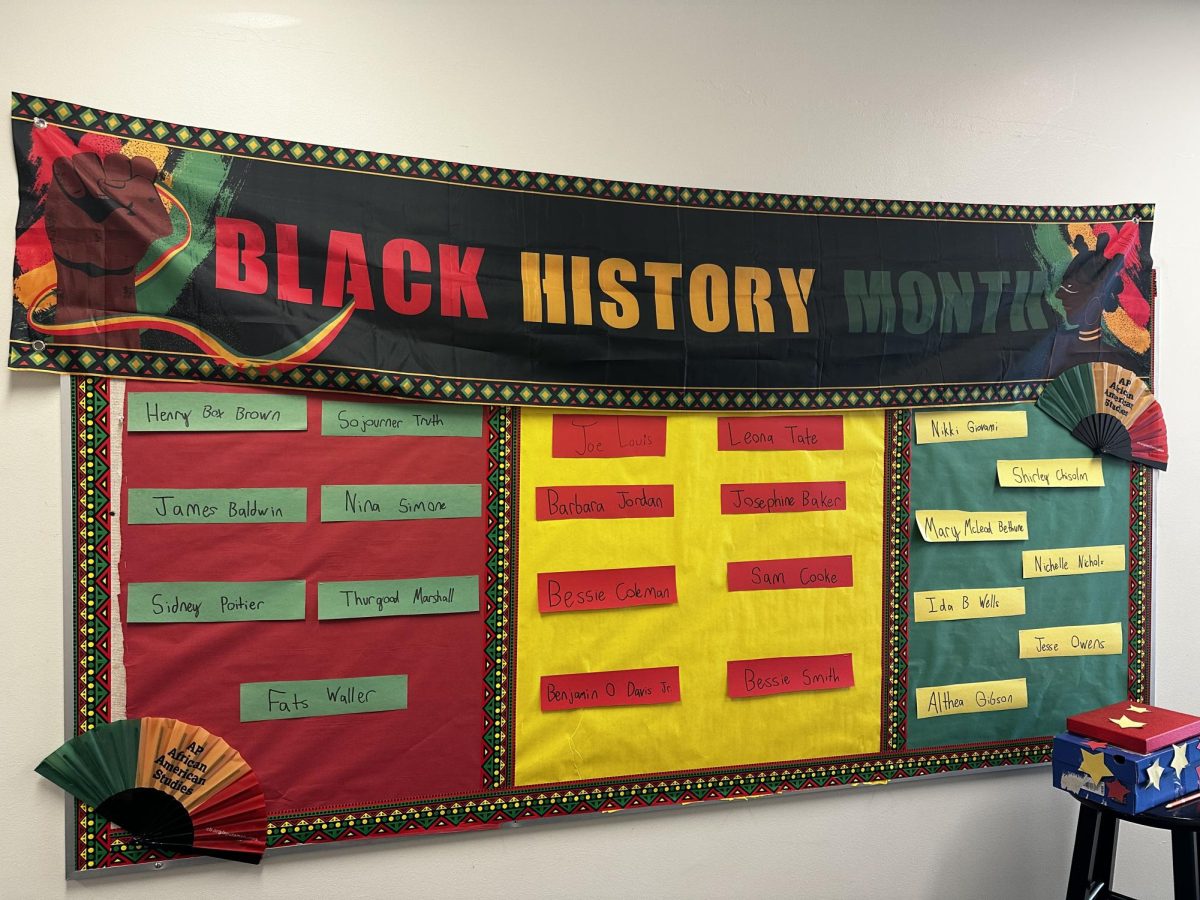
Black History Month
Black History Month is celebrated during February. It was established by “The Father of Black History,” Carter G. Woodson. The celebration originally was only a week long. President Gerald Ford recognized it in 1976 as a month-long event. We still celebrate it today in the form of parades, activism, and community events.
Carter G. Woodson was born in 1875. His parents were former slaves. They were illiterate, and attaining an education for Woodson as a child was difficult. Despite his background, he taught himself multiple subjects. He acquired a bachelor’s degree in literature from Berea College in Kentucky. He was the second Black American to get a Ph.D. from Harvard University. He envisioned the concept of recognizing Black Americans into a holiday. It formed into today’s Black History Month. He died in 1950, but his legacy lives on. February was chosen to align with the birthdays of Frederick Douglass and Abraham Lincoln. The celebration has become international. Canada recognizes it and the United Kingdom celebrates it in October.
The ASALH – Association for the Study of African American Life and History – chooses a new theme each year. This year was “A Century of Black History Commemorations.” It encourages a deeper curiosity in the accomplishments of Black Americans.
Let’s recognize some of the influential Black people in history. Just to name a few, Harriet Tubman – American abolitionist, Maya Angelou – writer, Sarah Goode – inventor and entrepreneur, Mae Jemison – first African American woman to travel in space, Ida B. Wells – journalist, activist, and suffragist, and Barack Obama – first Black American president. These are just a few incredible people.
Black History Month is very important. Black people have historically endured oppression, torture, harassment, slavery, and other unspeakable things. Black History Month reminds us to acknowledge and respect Black Americans and honor Black history.
There’s a quote that says “we all bleed red, but why must we bleed to prove it?” I encourage everyone to keep this in mind.
Women’s History Month
Women’s History Month is celebrated during March. It started as a local event in California dubbed “Women’s History Week.” The week became a national celebration in 1980, then a month-long celebration in 1987. It is celebrated with activism and awareness.
The event is centered around International Women’s Day on March 8th. In 1908, many women were protesting for better hours, pay, and voting rights. The Socialist Party of America took notice and announced the first National Women’s Day in 1909. The day specifically focuses on women’s suffrage. Suffrage is the right to vote in political elections. Women gained the right to vote in 1920.
The month advocates for women’s rights and gender equality. It is a symbol of feminism. Feminism is a range of social, political, and ideological movements aimed at establishing equal rights and opportunities for all genders.
Some important women in history include Marie Curie – physicist and chemist, Princess Diana – beloved royal figure, Rosa Parks – civil rights activist, Susan B. Anthony – suffragist and abolitionist, Anne Frank – symbol of resilience, wrote an incredibly impactful diary, and Sally Ride – first American woman in space. The world wouldn’t be the same without them.
Women’s History Month is still important today because women get overlooked too often. The month is a yearly reminder that we should focus on equality in all aspects of life. Maya Angelou once said that “…people will never forget how you made them feel.” Make others feel seen and appreciated.
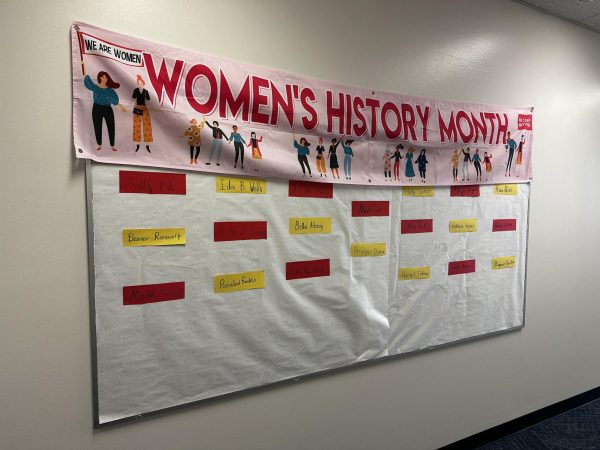
Mrs. Goddard’s Women’s History Wall in the 300s wing.