










Dia de los Muertos, or Day of the Dead, is a traditional Mexican holiday that celebrates and honors the lives of loved ones who have passed away. Rather than being a sad occasion, it is a joyful and colorful celebration that reflects the belief that death is a natural part of life, and that the spirits of the dead return each year to visit their families. The holiday takes place on November 1st and 2nd.
The roots of Dia de los Muertos go back thousands of years, long before Spanish colonization. The Aztec, Maya, and other indigenous peoples of Mexico held rituals that honored the dead and believed in the cyclical nature of life. When Spanish conquistadors arrived in the 16th century, these indigenous traditions mixed with Catholic beliefs. Over time, they blended into the celebration we know today.
During Dia de los Muertos, families create ofrendas (altars) in their homes or at cemeteries to welcome the spirit of their loved ones. These altars are decorated with photos of the deceased, candles, flowers, especially marigolds, known as ‘cempasúchil, favorite foods, drinks, and personal belongings of the departed. The scent and bright colors of marigolds are said to help guide spirits back to the world or the living.
Another well-known symbol is the calavera, the sugar skull. These colorful skulls represent the joy of life and the belief that death should not be feared. People also enjoy traditional foods like pan de muerto (bread of the dead) and atole, a warm drink made from cornmeal. Families often visit cemeteries, bringing food and music to spend time near the graves of their ancestors, turning the experience into a family reunion between the living and the dead.
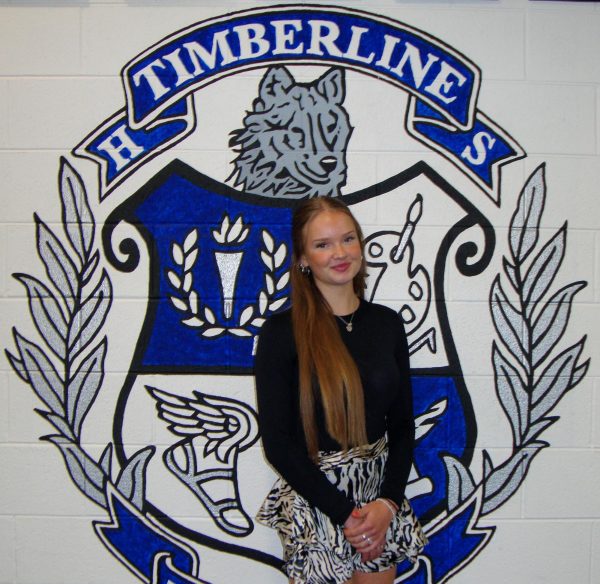
I had the chance to talk to Avril Yanez, a sophomore at Timberline who moved here from Mexico two years ago. I started by asking how she and her family celebrate Día de los Muertos each year. She told me that her family usually has a huge ofrenda. The whole family gets together at her grandma’s house. “Some of my really creative cousins get all dressed up as catrinas, the skull make-up.” Her family likes to cook traditional Mexican food and eat “pan de muerto”. They also go to church and the cemetery, where most of our loved ones are.
“Things that our past loved ones liked in life are the things we put on our ofrenda.” She gave examples like their favorite cookies, blankets, toys, or other food. They also put candles, pictures, and all types of flowers on the ofrenda. She told me especially “cempasuchil”, a flower that represents help for their loved ones to find their way back: “just follow the flower.”
At last, I asked her what she thinks the most beautiful part of this tradition is. “This time of the year is to remember our past ones as happily as we can.” She talked about not being sad that her loved ones passed away, but celebrating them, sharing precious memories that they built with them. “One of my favorite parts is the meaning of the flowers.” She feels like it’s really deep, guiding her loved ones so that they can know their way back home.